INDUSTRY:
Luxury Home and Apparel
CLIENT:
Cozy Earth
YEAR:
2025
TYPE:
Design
Shop The Look
about.
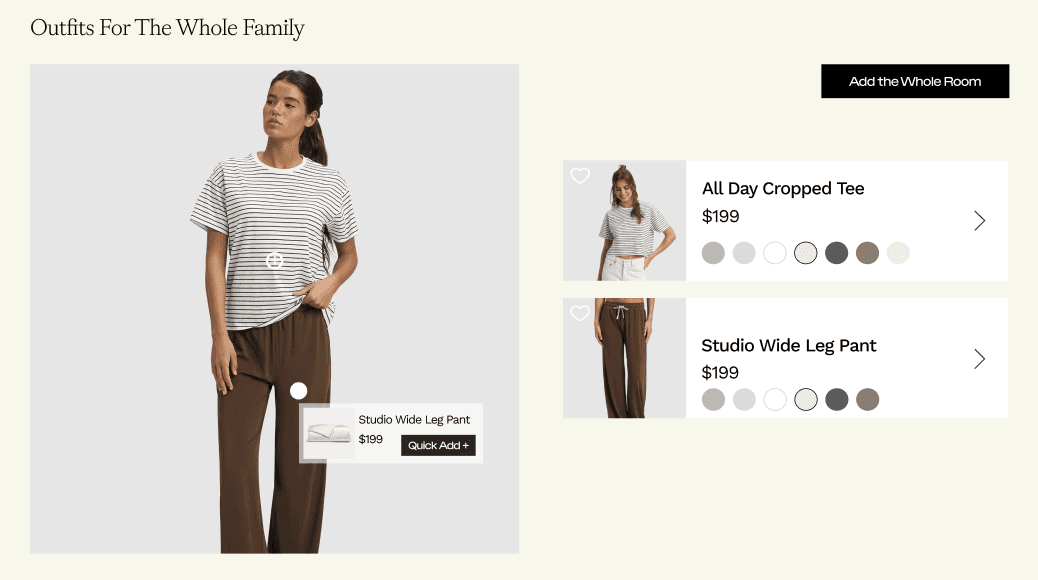
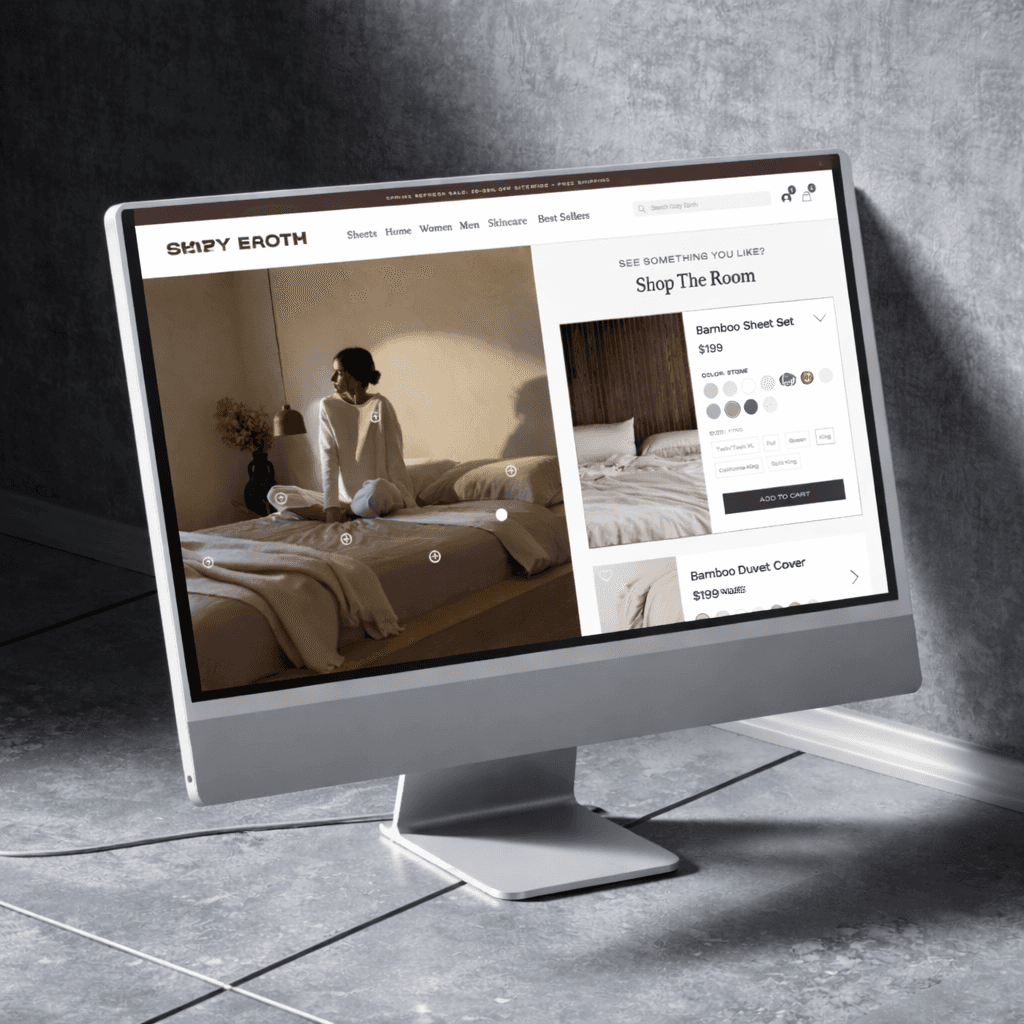
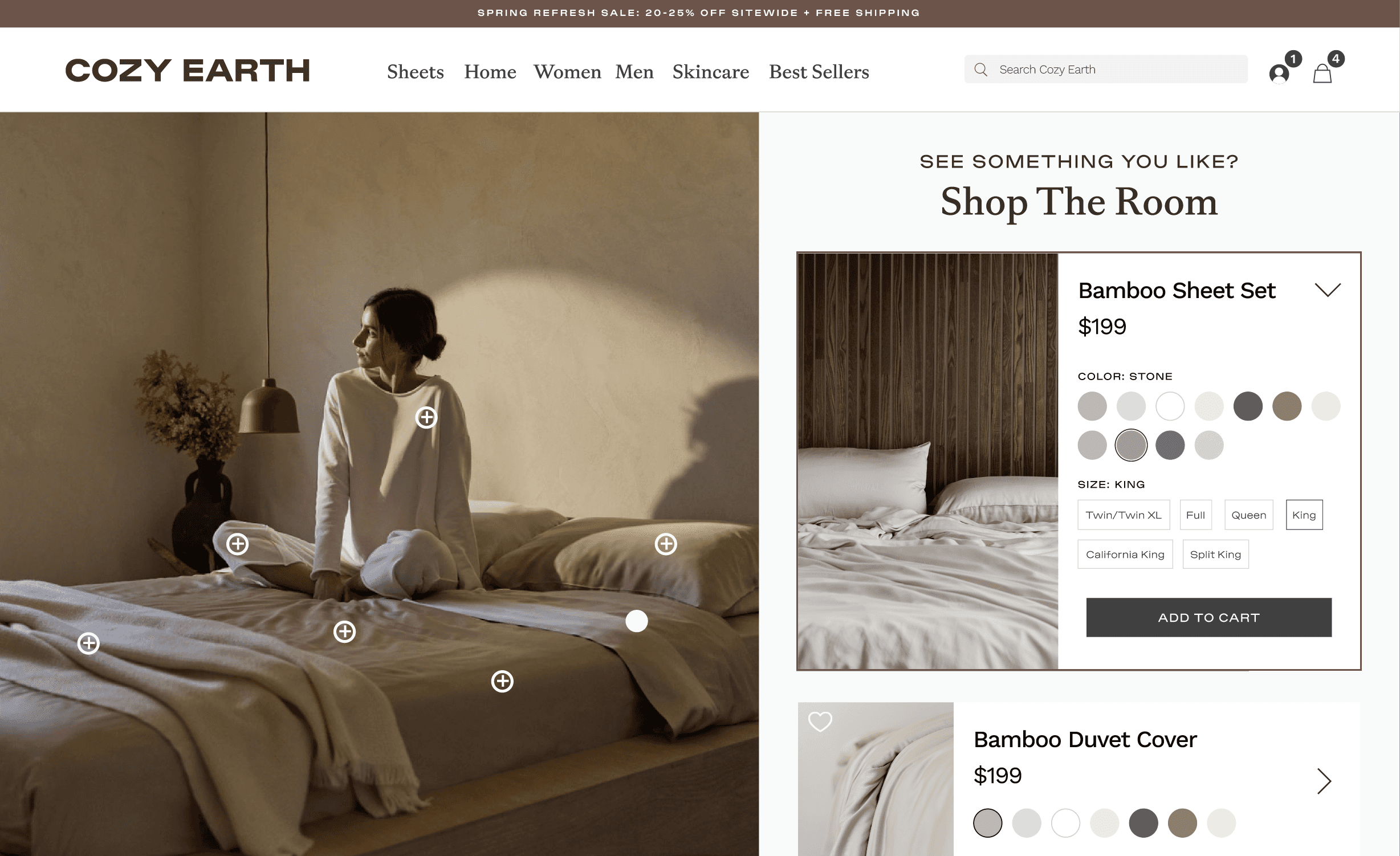
Cozy Earth wanted to introduce a Shop the Look feature that would let customers purchase every product shown in a styled room or lifestyle image. The goal was simple. Help customers visualize how items work together and make it easier for them to buy full sets instead of single products. I was given ownership of the design and tasked with figuring out what this experience should be, how it should function, and where it should live across the site. Pretty quickly, it became more than just a UI component. It turned into a full process of research, iteration, decision making, and collaboration.
process.
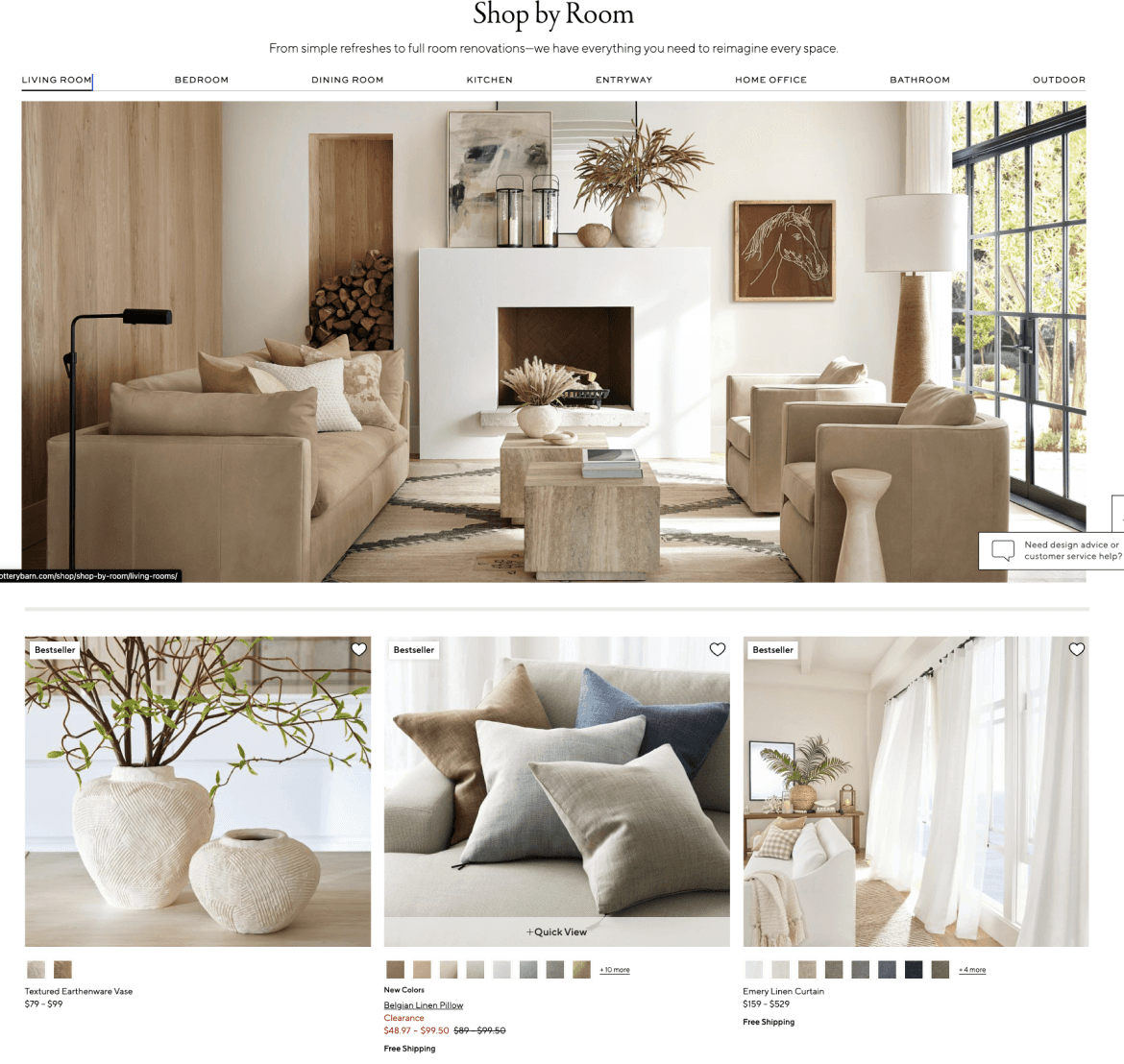
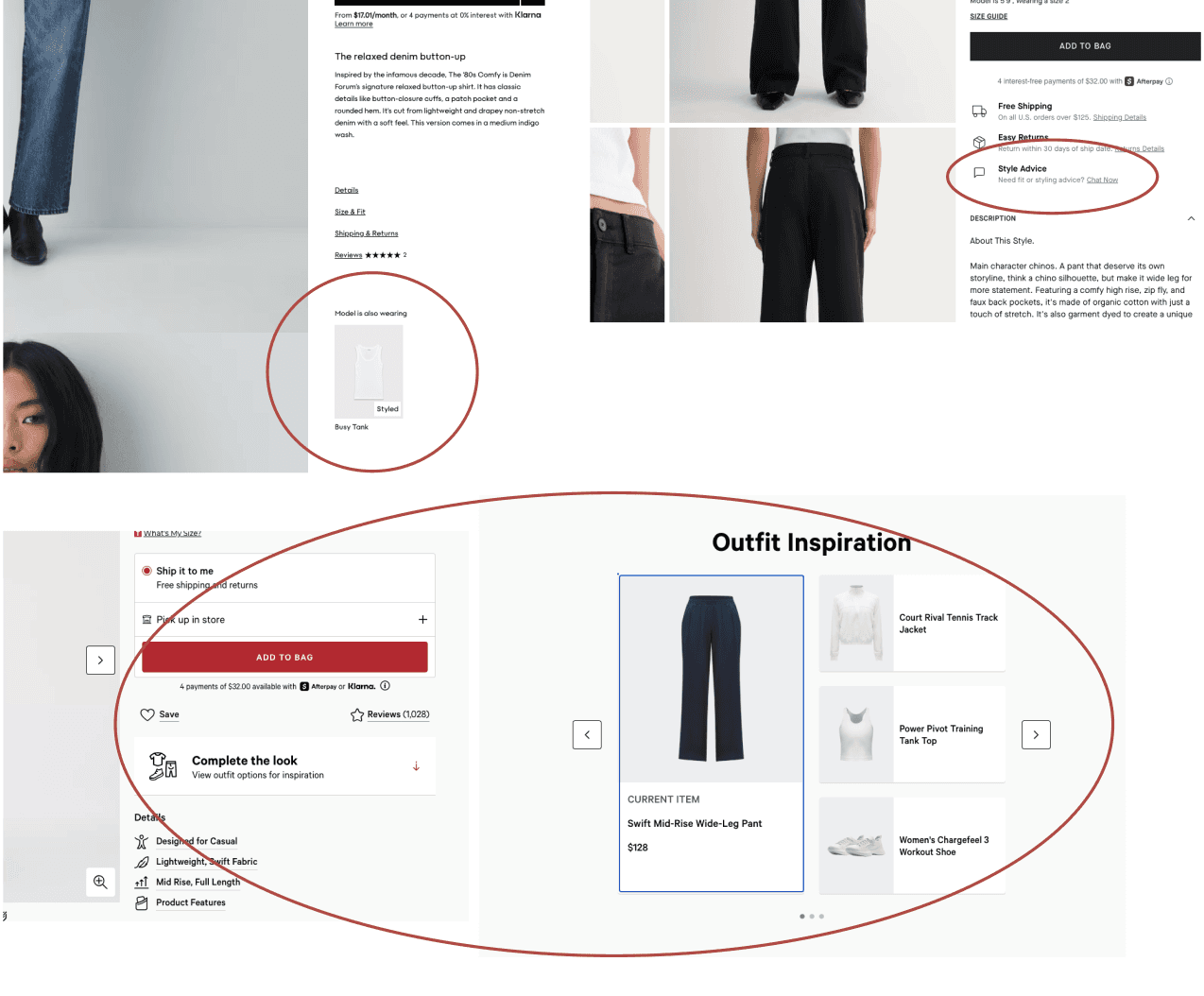
I started by researching how other premium and luxury brands approached similar features. I expected to find a clear standard, but instead I found a wide range of solutions. Some brands built full pages dedicated to browsing entire rooms and shopping each item within them, while others kept it simple with a button on the product page that let users add the whole look to their cart. Seeing such different approaches made it clear there was no single right answer. The real challenge was figuring out what would work best for our customers and our site structure.
My goal became designing something flexible. I wanted a component that could stand on its own as an immersive browsing experience but also scale down into a smaller module that could support landing pages or product pages. That meant thinking beyond visuals and approaching it like a system. It needed to be reusable, adaptable, and consistent no matter where it appeared.
After gathering references, I moved into sketching layout ideas and narrowing them into a few strong directions. I created three design iterations and reviewed them with the Director of Digital Product and the Senior UX Designer. Together we evaluated them based on usability, clarity, and scalability across the site. We landed on a direction that balanced visual storytelling with straightforward shopping actions.
The design phase moved quickly, but the most valuable part of the project actually came after handoff. I stayed involved during development, which was a first for me at that level. Working closely with developers gave me a much better understanding of how design decisions translate into real builds. The feature itself was fairly simple technically, which made it a great learning opportunity. I got to practice communicating design intent, answering edge case questions, and adjusting details so the final result matched what I had envisioned. It also helped me build stronger relationships with the dev team, which has made collaboration on later and more complex projects much smoother.
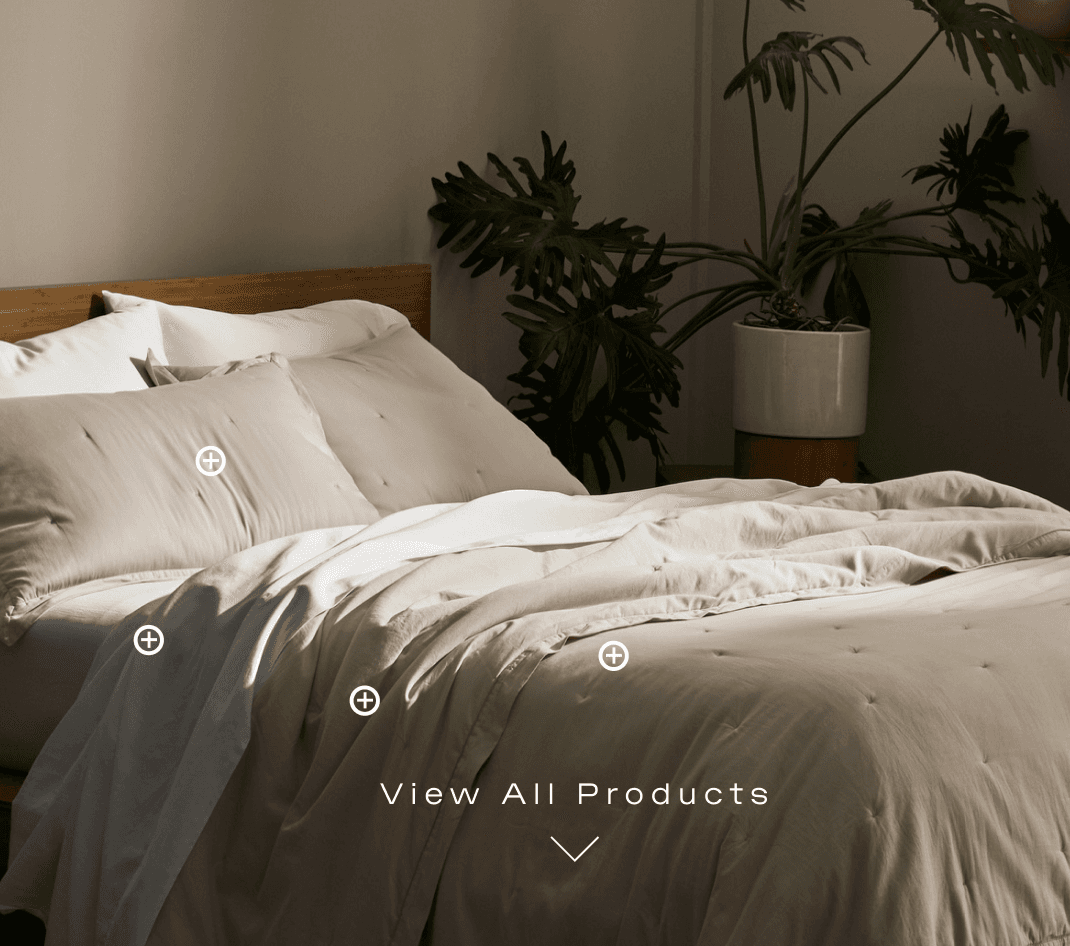
One challenge appeared once we began placing the feature across different pages. We realized we did not yet have enough lifestyle or staged imagery to support it everywhere we wanted. Because the feature relies heavily on strong visuals, I started running into limitations with available assets. Over time we solved this by expanding our library of non studio photography so the component could be used more broadly across the site.
outcome.
This project stands out to me because it marked a turning point in my growth as a designer. It was the first interaction focused feature I fully owned from concept through launch that went directly into development and live production. Seeing something I designed being used by real customers and contributing to the business was incredibly rewarding. More importantly, it showed me how much stronger a product becomes when design does not stop at mockups but continues through implementation and collaboration. It gave me confidence in my ability to take an idea, shape it into a scalable solution, and carry it all the way through to real world impact.